Fingerprials of Artificial Intelligence LayAffs and the reduction of Meta (Meta), Amazon (AMZ), YouToForce (CRM
Ai could harm office workers, but there is reason for hope, Goldman Sachs CEO David Solomon believes. America’s flexible workers will emerge, as they have in the past, Solomon told CNN during an interview.
Solomon, speaking on the sidelines of the Goldman Sachs (GS) Conference of 10,000 small businesses in Washington, pointing to the disruption caused by the invention in the late 1700s of the Steam engine.
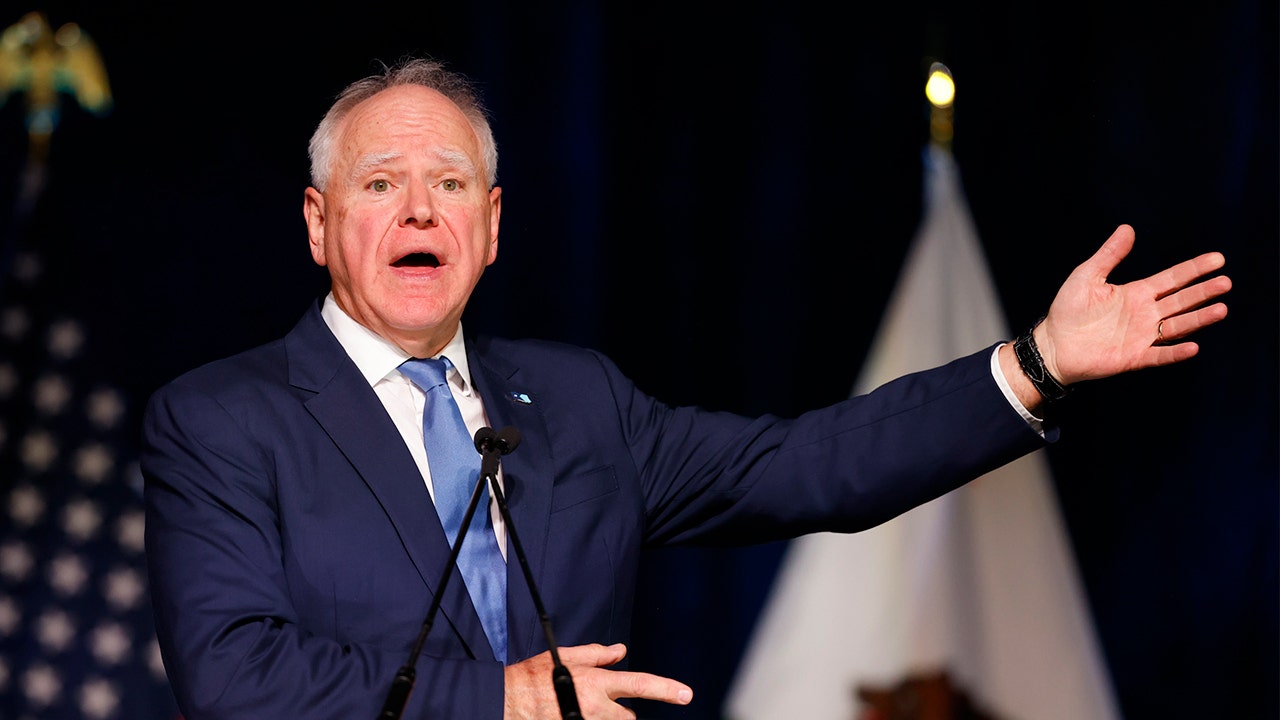
David Solomon, Chief Executive Officer of Goldman Sachs Group Inc., speaks during the Washington Economic Club in Washington, DC, on October 30, 2025
“There will be disruptions. But I’m a believer that our economy is very productive, very flexible. And if you look at the technology that has swelled for centuries in our society,” said Solomon. “We’re getting new businesses. We’re getting new jobs. I don’t believe it’s going to be any different this time.”
Of course, that adjustment process can be difficult — especially for workers whose jobs have been fragmented by new technologies.
The big difference this time is the explosive speed at which AI is being adopted by businesses – and how quickly AI has developed. A study by Golden Sachs of Bankers found that 37% of clients use AI for productivity on a regular basis, which is expected to increase to 50% in the next year and 74% in the next three years.
Chatgpt was founded in November 2022 and now has about 800 million active users. Its parent company Abalayi is said to be laying the groundwork for an IPO that could value it up to $1 trillion.
Today’s AI Chatbots can do deep research, produce reality films, compose music and even flag financial fraud before it’s filled.
That speed would make a transition bumper this time.
“The pace of adoption of this technology is slowing down rapidly. As businesses struggle to deploy technology and exchange, it means a temporary disruption, says Goldman Sachs. “But our economy is very broad and shrinking.”
Office workers may be particularly exposed to such disturbances.
Although Amazon’s CEO Andy Jassy told analysts recently of 14 000 the company ‘wasn’t even with Ai that they are accepting the power of AI and AI will reduce the workforce of the company’s organizations.
Meta recently cut 600 roles within its AI team, which reports indicated is part of a major outsourcing effort. YouTube this week began offering voluntary employee buyouts as part of an AI-focused restructuring.
Employees at Chegg, an online education company, were harmed by AI in two cases. First, the rise of chatgpt reduces the demand for chegg education services. Second, chegg itself has invested in Ayi, promising to run its business leaner with fewer employees to compete. This week Chegg said it will furlough about half of its workforce as it grapples with the “new realities of AI” and lower search traffic.
AI was identified as the reason for the 17,375 announcements of the year this year followed by dismissal and training the company challenge, gray & Christmas from the end of September. That represents less than 2% of the total layoffs announced this year.
However, Challenger noted that this is under collective power. Some of the 20,219 job cuts announced during that period were concentrated at companies presenting unspecified technology updates — some of them unrelated to AI.
“The need for other white-collar jobs will be reduced, but they will be taken from other parts of the economy,” said Solomon.
In contrast, anthropic deo dario amodei has warned that AI could eliminate half of the entry-level jobs in white-collar technology, suggesting an unemployment rate of up to 20% in the near future.
“It’s a creation of the general public and the politicians, the legislators, I don’t think, are fully aware of what’s going on,” Amodei told Anderson Percene in May. “We have to act now. We can’t just sleep on it.”
The chairman of the Federal Reserve Jerome Powell admitted during a press conference that “a large number of companies” or they do not hire a large part because of AI.
“We looked at that very carefully … it could have absolute implications for job creation,” Powell said.
A survey of more than 100 stars by Goldman Sachs Investment found that 11% of US companies are “actively reducing headcount due to AI,” said a report last week. However, that number rises to 31% for technology, media and reason companies.
Bankers Goldman Sachs expects that AI will lead to a “modest headache” reduction of 4% in the next year. But that number could rise to 11% over the next three years — especially in customer service jobs.
Jan Hatzius, chief economist at Goldman, wrote that the findings support the bank’s view that AI will have a “transformative impact on the labor market and the economy,“And that approval quickly signals that” the impact of AI on the US labor market may come sooner than expected. “
The AI Boom has also raised concerns about a bubble forming in this red-hot part of the market.
Solomon said that while many “big companies” will be formed during the AI Boom, at some point the rollout can get overwhelming and it won’t be “straightforward” in value.
One situation he puts in place is that the need for AI services sometimes fails to meet high expectations, driving down the driving force.
But that plan can make time to play because, as Solomon noted, many high-tech companies are well established and new AI companies are still in the private market, where tusluation markworch only changes.
“Technology is exciting – there should be a lot of enthusiasm for it,” Solomon said. “But there will be bumps there, too.”
— CNN’s Alicia Wallace contributed to this report.
For more CNN news and newsletters create an account at CNN.com