– For todayNow you can listen to FOX news headlines!
Many documents showing some of the worst Nazi war criminals were released and said to have been added earlier this year by Argentine President Javier Milei. More than 1,850 documents covering thousands of pages describe the South American country’s efforts to trace and confirm the whereabouts of thousands of Nazis who fled to Europe after World War II.
The catalyst for the effort came from the Senate Judiciary committee and its chairman Chuck Grassley, R-Iowa, who was recognized by the Simon Wiesenthal Center for his efforts to obtain the documents.
Most of the artifacts related to investigations conducted between the late 1950s and 1980s are made available on the Chrough General Archive Web site, along with Secrefied Direction Dealrees from 1957 to 2005.
The original batch of documents released online is divided into seven large files centered around the top Nazi criminals covered. There are many documents related to Adolf Eichmann, the engineer of the “Solution Offer,” the plan to exterminate the Jews of Europe. He lived under the name Ricardo Clement around Buenos Aires until he was captured by MOSSAD Agents in Argentina and taken under covert operations to trial in Jerusalem in 1960.
101-year-old KristiAllnachnacht warns current age is ‘equivalent to 1938’ by celebrating Nazi approval
Adolf Eichmann, in the kitchen of ammunition, listening to the reading of the indictment against him, planned the deportation and extermination of the Jews in 13 European countries. (Keystone-France / Gamma-Keystone via Getty Images)
The case of Eichmann shows prominently in the files and there is evidence that the left, the Government with the size of Juan Perón not only knew that Eichmannn existed but also made efforts to protect him.
Many documents also exist describing the lives of Josef Mengele, the “angel of death” doctor from Auschwitz-Birkenau camps who lived in Argentina and were located in Paraguay and Brazil, where he died in 1979.
Documents describing the hunt for Martin Bormannn, Lielenant of Hitler and the right-hand assassin, and the Croatian assassin, the Devity Führer and the Defector Rührer and the Defector Rudolf Hess and the so-called “Rudolf Hess and the so-called files.
The daughter of a Nazi officer has been delisted after a stolen WWII painting
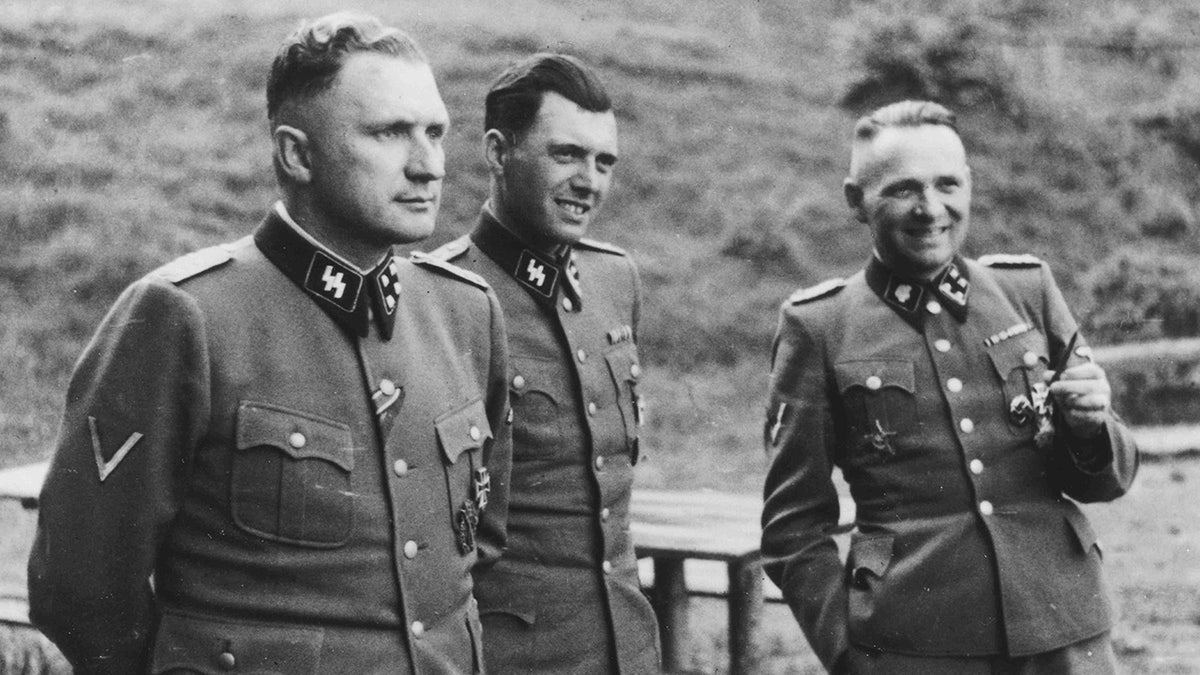
Three SS officers meet on the grounds of the SS retreat outside Auschwitz, 1944. From left to right are: Richard Baer (commander of auschwitz (commander of auschwitz (commander of auschwitz) (Credit to Universal Archive / Universal Pictures Group via Getty Images)
According to Harley Lippman, a member of the United States Commission for the preservation of American heritage abroad and a member of the Board of the European Herish Association, the relevance of the release of Argentine documents has not been taken into account.
“There are many questions that can bring light to why a complex society, away from the plagues of European antisemitism like Argentina and their secrets that carry the country and given to the authorities?” he asked.
“On the one hand, it’s a shame that Argentina kept the secret of this secret for so long, but on the other hand, we need to appreciate the great efforts made by this fake to be able to face their demons as a society rather than the Jews,” said Lippman.
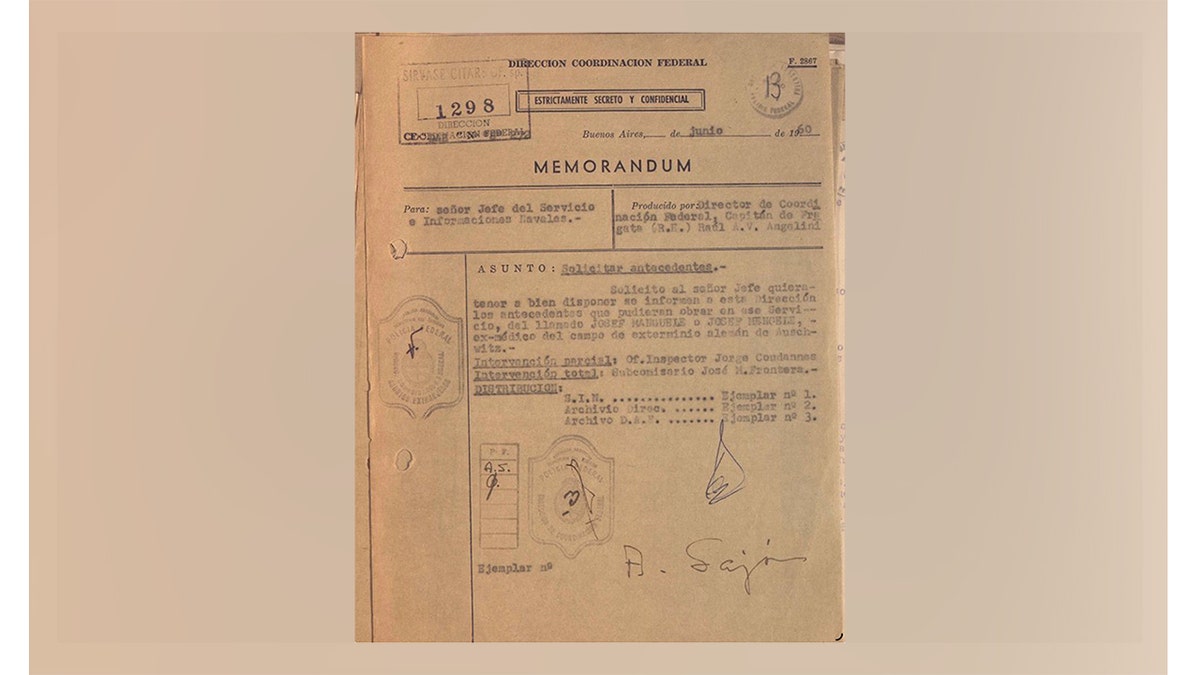
This 1950 Argentine police memo, strongly and confidentially marks Josef Mengele, the famous Nazi doctor of Auschwitz, suggesting that the Argentine authorities were aware of his existence at the time. (For general maintenance of the Government of Argentina)
To add to the great formation, in May, when the Supreme Court of Argentina revived and transferred the collections of documents to the museums, a forgotten flashlight of the Nazi coffins was found almost unborn in the basement of the center. Upon inspection, the crates revealed documents classified by Argentine customs in 1941, sent from the German Embassy in Tokyo to Tokyo, Japan, Argentina Aires, within the Japanese termer nan-a-maru.
The documents were sent as personal effects of the Embassy staff but were taken under the orders of the minister of state due to foreign affairs so as not to reverse Argentina’s neutrality in the war. The shipment was the subject of a service carried out by the commission investigating “anti-Argentine activities”, which led to the confiscation and acquisition of the crates by the Supreme Court of the country, where they remained for almost 84 years.
The discovery of the boxes has revealed many things that aim to spread and consolidate the ideas of the third and hitler’s ideas in Argentina and South America, perhaps in an attempt to be neutral under the auspices of Germany.
Milei gets a historic win in the Argentina Midterms, strengthening participation in Congress
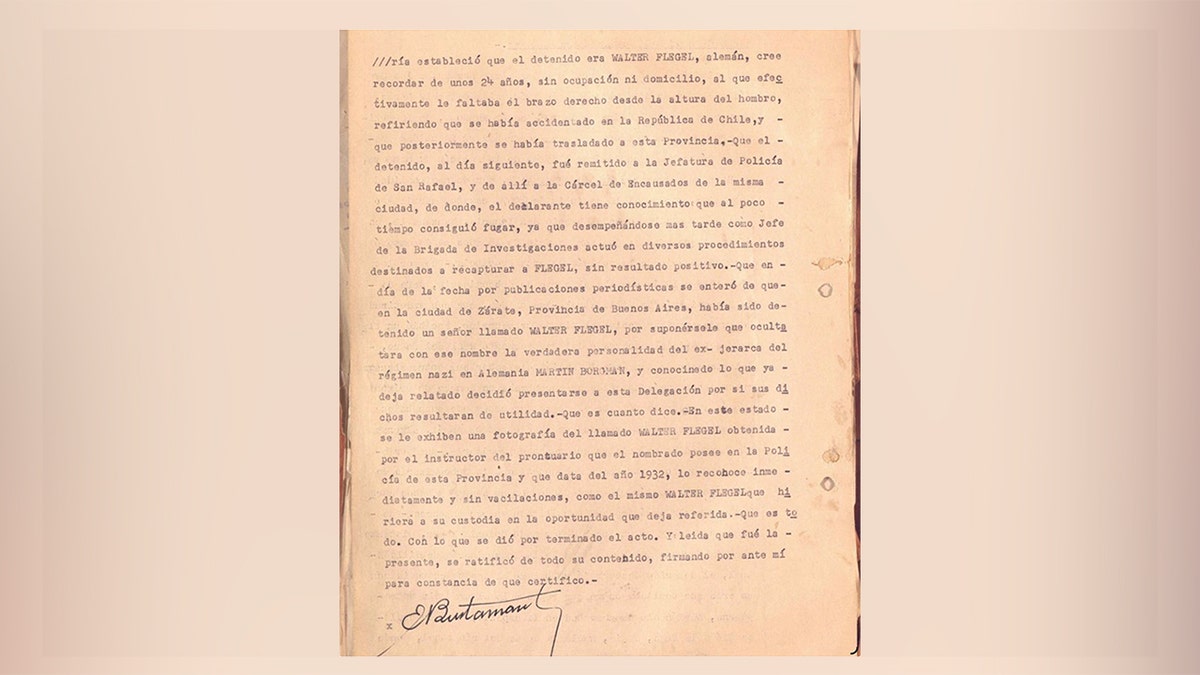
This document recounts the report of the Argentine police who described the German fugitive, Walter Flegel, who believed that others were Martin Bormann, who had denied Hitler, living under a false identity in Argentina. It was later proven that the lead was wrong and the vargals were not Borman. Earlier this year Argentine President Milei revealed and released more than 1,850 documents detailing Argentina’s efforts to track down and convict thousands of Nazi war criminals. (For general maintenance of the Government of Argentina)
After opening the boxes and prominent members of the Jewish community of the country, the Court issued a statement saying that the historical relevance of its findings and the important information that could be available to clarify the events related to the Holocaust, “a complete survey of all the property was ordered.
The contents of the crates have not been made public, but Milei’s office says that once all the documents have been used, they will be taken down and made available.
Argentina’s head of the Cabinet of Ministers, Guillermo Francos, previously said Milei gave [such] The order “because there is no reason to continue withholding that information, and it is no longer in the interest of the Argentine Republic to keep such secrets”.
“Jews after World War II lived a golden age of about 80 years in which antisemitism had fallen, and partly because of the acquisition of public identity concerning the perpetrators of the war in the war, but also to bring back the old Antisemitic views that existed in Germany and before then passed,” said Lippman.
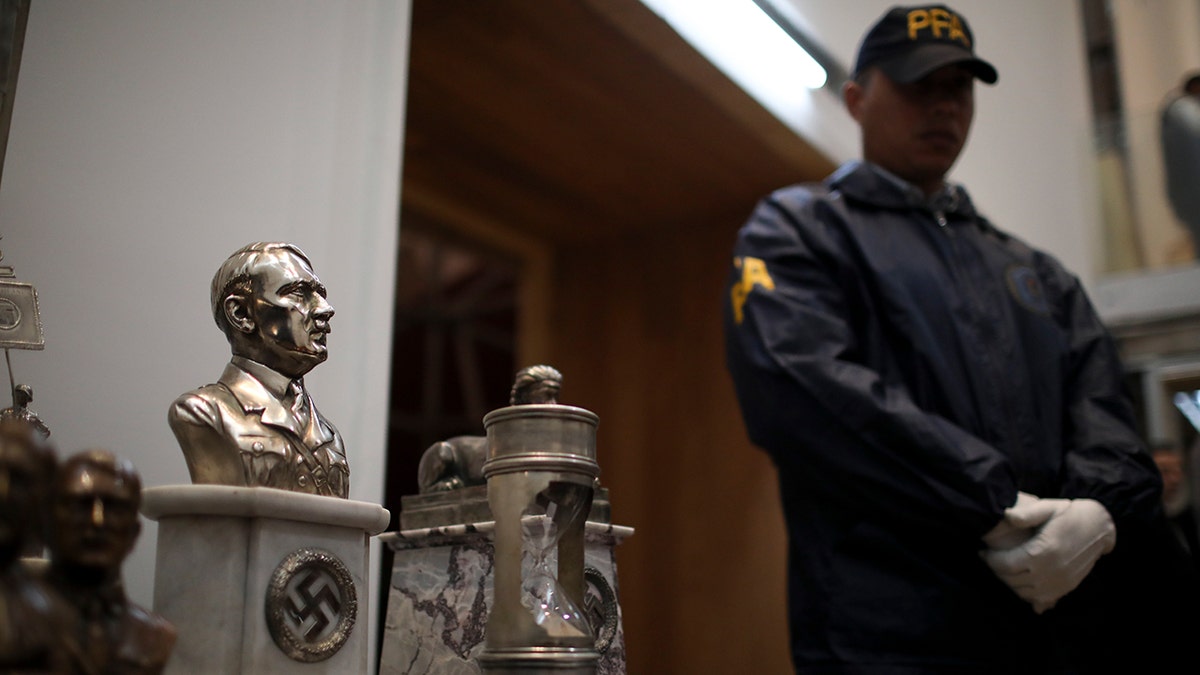
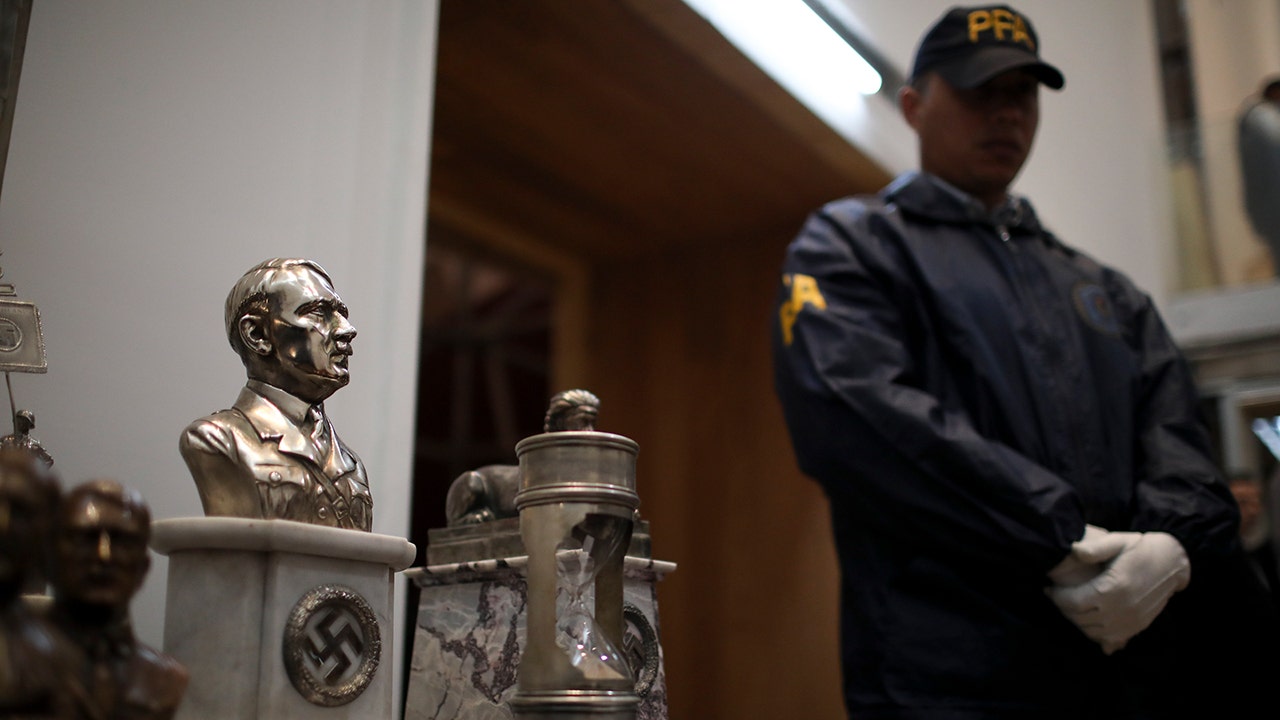
A police chief stands in front of a cache of Nazi artefacts found in 2017, during a press conference in Buenos Aires, Argentina, on Wednesday, Ministers found a cache of suspicious origin found in a gallery in Buenos Aires. (Natacha Pisarenko/AP Photo)
“It’s a fact that most people under 30 don’t know or understand [the meaning of] The Holocaust is part of the reason why antisemitism is on the rise again. “The Holocaust was the largest industrial massacre in history. This happened 80 years ago.
Click here to download the FOX News app
Apart from the lives of the top Nazis who escaped from South America with the names called “Ratlines – under the concept of the local Government, Lippman said that the documents could also provide important information played by the Swiss and Argentine Banks.
“The Holocaust was the biggest heist in history. Many Swiss banks [which were the depositaries of Jewish money] he wouldn’t give money to a cold survivor of a Holocaust family without a death certificate for their loved ones. But Auschwitz didn’t issue death certificates – they only issued ashes. “